

Italy
The contemporary art scene in Italy is a testament to the nation's deep-rooted artistic tradition, vibrantly interacting with innovative expressions and global movements. Esteemed institutions, including Rome's MAXXI and Venice's Palazzo Grassi, not only present internationally acclaimed artists but also foster emerging talent. Pioneers like Maurizio Cattelan, recognized for his satirical sculptures, and Vanessa Beecroft, known for her immersive performance art, enrich the country's artistic panorama. Italy continues to be a beacon for contemporary art, with its art fairs such as Artissima in Turin, offering a global platform for artistic dialogue. Explore the richness of Italy's contemporary art on the Composition Gallery's website.
- Show All
- Established
- Discoveries
- Show All
Artworks Related to Italy

Dadamaino
Il movimento delle cose, 1994
Drawing / Watercolor
Pen and ink
EUR 8,350

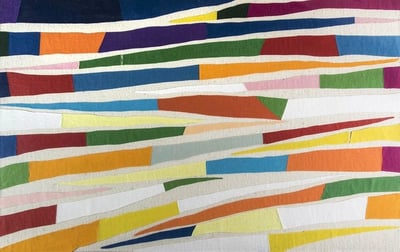
Piero Dorazio
Felt Collage, 1974
Limited Edition Print
Collage
EUR 6,875
Piero Dorazio
Untitled (Collage), 1974
Limited Edition Print
Collage
EUR 6,875
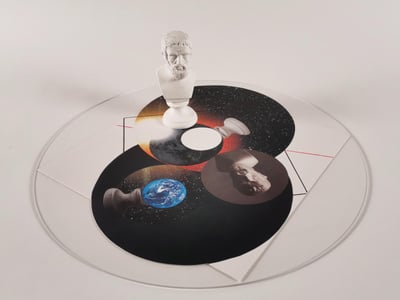
Giulio Paolini
Elea, 2009
Sculpture / Object
Assemblage
EUR 2,300

Giulio Paolini
Signore e Signori…, 1988
Limited Edition Print
Silkscreen
EUR 1,250
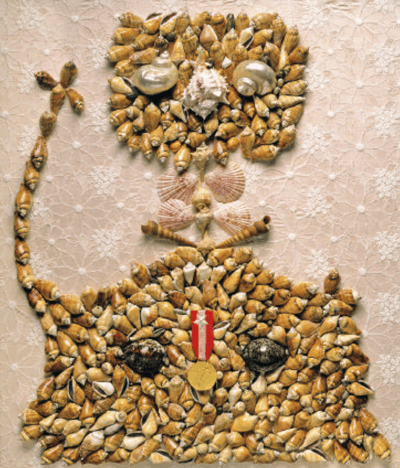
Enrico Baj
Catherine Henriette de Balzac d’Etrague Marquise de Verneuil, 1978
Sculpture / Object
Mixed Media
EUR 9,500
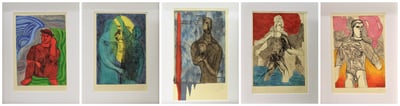
Sandro Chia
Elektra, 1995
Limited Edition Print
Mixed Media
EUR 2,500
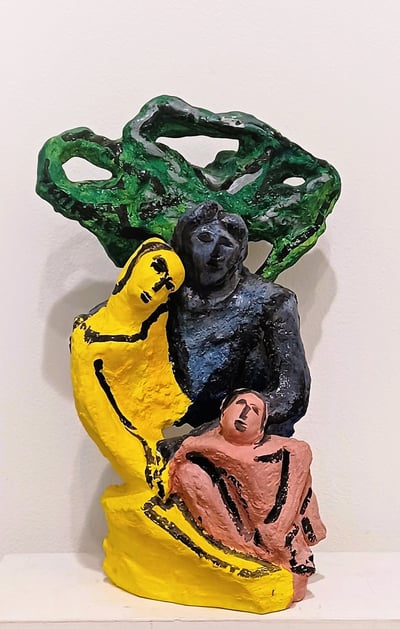
Sandro Chia
Figure con albero, 1994
Sculpture / Object
Ceramic
EUR 7,300

Mario Merz
Senza titolo, 1991
Limited Edition Print
Mixed Media
EUR 1,600

Michelangelo Pistoletto
Alter Ego, 1984
Limited Edition Print
Screen-print
EUR 1,050

Massimo Vitali
Bari, 2003
Photography
C-Print
Currently Not Available
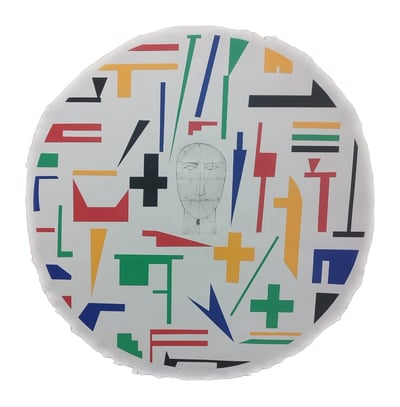
Mimmo Paladino
Scudo 3, 1999
Limited Edition Print
Mixed Media
EUR 2,530
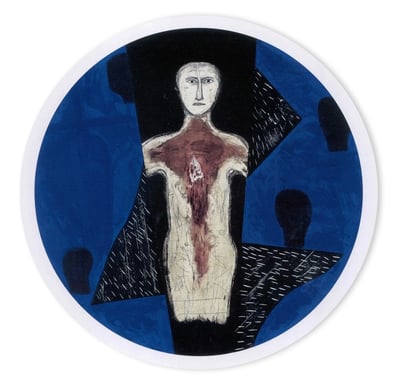
Mimmo Paladino
Oceania, 1996
Limited Edition Print
Mixed Media
EUR 2,530
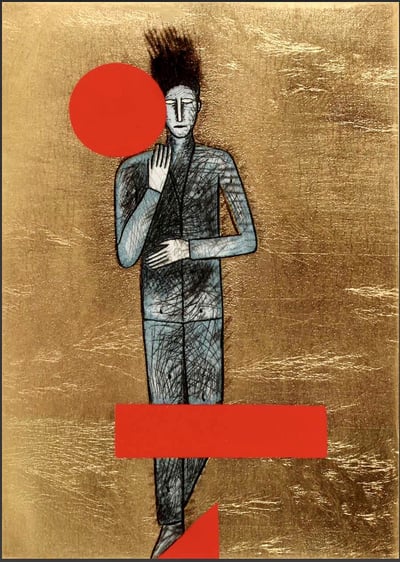
Mimmo Paladino
Sans Titre, 2001
Limited Edition Print
Mixed Media
EUR 1,250
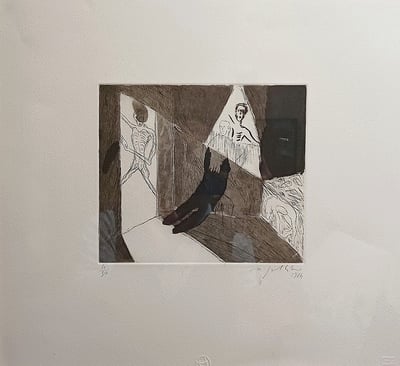
Mimmo Paladino
Necropolis, 1984
Limited Edition Print
Etching
EUR 1,250

Alberto Biasi
Red Rain, 2022
Sculpture / Object
Mixed Media
EUR 3,000
Related Articles



De Stijl, meaning The Style, was a group of Dutch artists who created abstract art based on strict adherence to vertical and horizontal geometry. The group was founded by Piet Mondrian and Theo van Doesburg in 1917. Mondrian eventually left De Stijl when Van Doesburg began incorporating diagonal geometry into his work, which Mondrian felt deviated from the group's principles.

Graffiti art refers to drawings and writings that are painted, scratched, or scribbled on walls or other surfaces, typically in public spaces. This art form ranges from small tags to elaborate wall paintings. Graffiti has been in existence since ancient times, with examples dating back to the Roman Empire, Ancient Greece, and Ancient Egypt.

Spatialism is an art movement that originated in Italy in 1947, founded by Lucio Fontana with the intention of synthesizing sound, color, movement, and space into a new form of art. The movement's central ideas were outlined in Fontana's first manifesto, published in 1947, where he introduced the concept of spatial art to capture the spirit of the post-war era. His ideas were further developed in five subsequent manifestos. Although Fontana's ideas were sometimes considered vague, his influence was significant, as he was one of the first European artists to emphasize art as a performance and gesture.
Can't find your Answer?
Thank you! Your question has been sent — we'll get back to you shortly.
