
What is conceptual art?
- Show All
- Established
- Discoveries
- Show All
Artworks Related to Conceptual art

Tracey Emin
A Deeper Place, 2025
Limited Edition Print
Lithograph
Inquire For Price

Weiwei Ai
To Be Looked At..., 2024
Sculpture / Object
Metal
USD 6,600

Gavin Turk
Black Gold, 2015
Painting
Oil on canvas
GBP 5,000 - 7,000

Peter Doig
Ten To One Is Murder, 2019
Limited Edition Print
Pigment print
GBP 6,000 - 8,000

Weiwei Ai
Study of Perspective in Glass (set of 6), 2020
Sculpture / Object
Glass
EUR 60,000

Damien Hirst
Lorabid 200mg, 2014
Sculpture / Object
Mixed Media
GBP 8,000 - 10,000

Damien Hirst
Theo-Dur Repetabs 200mg, 2014
Sculpture / Object
Mixed Media
GBP 8,000 - 10,000

Damien Hirst
Selflessness (from The Secrets), 2024
Limited Edition Print
Giclée printing
GBP 10,000 - 15,000
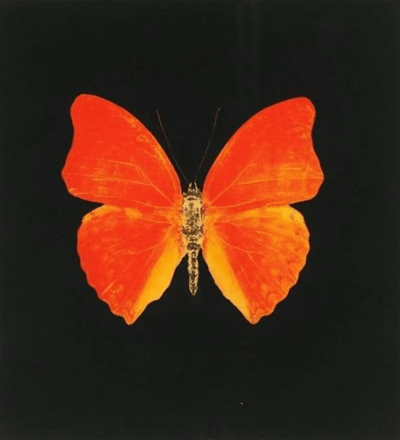
Damien Hirst
Memento 3, 2008
Limited Edition Print
Intaglio
Inquire For Price
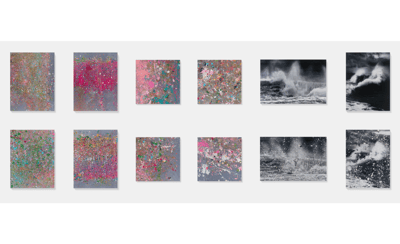
Damien Hirst
Where the Land Meets the Sea, 2023
Limited Edition Print
Giclée printing
Inquire For Price
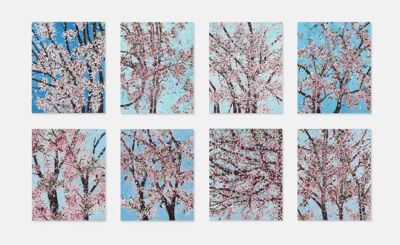
Damien Hirst
The Virtues (set of 8), 2021
Limited Edition Print
Giclée printing
Inquire For Price

Ed Ruscha
Sunliner #7, from Sunliners, 1995
Limited Edition Print
Etching and Aquatint
USD 4,690

Javacheff Christo
Wrapped Statues, Sleeping Fawn, Project for the Glyptothek, 2001
Limited Edition Print
Mixed Media
EUR 9,000
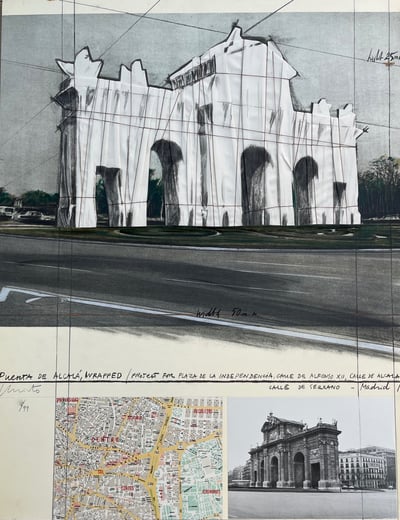
Javacheff Christo
Puerta de Alcalá, Wrapped; Project for Madrid, 1981
Limited Edition Print
Lithograph
Currently Not Available

Panamarenko
Portable Air Transport, 1969
Limited Edition Print
Offset Print
EUR 3,300
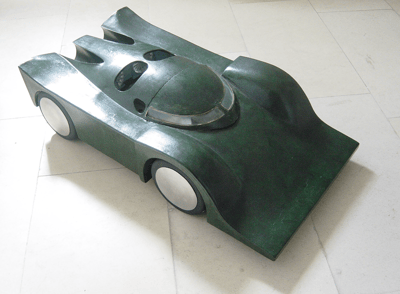
Panamarenko
Polistes, 1990
Sculpture / Object
Mixed Media
Inquire For Price
Related Articles


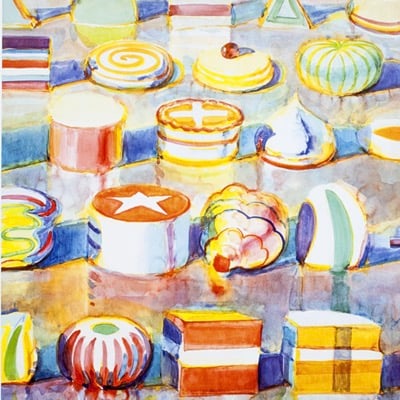
The Bay Area Figurative Movement, which also goes by the names Bay Area Figurative School, Bay Area Figurative Art, or Bay Area Figuration, came to existence in San-Francisco Bay Area. This was in the mid-20th century, when a group of artists from the area stopped working on the then popular Abstract Expressionism for a preference to figuration in painting. The movement lasted a total of two decades during the 1950's and 1960's.

Entropy, in a broader sense, refers to the inevitable deterioration or decline of a society or system. In art, the concept was popularized by artist Robert Smithson in the 1960s. He used the term to critique what he saw as the static and overly simplified nature of contemporary minimalist art. Smithson's work often explored the idea of entropy as a force of chaos and decay, contrasting with the perceived order and purity of minimalist works.

Clay is a natural material formed when rocks break down over time due to weathering. Water carries the fine particles of earth, which accumulate as a soft, sticky substance called muck. This muck is collected, cleaned, and refined by removing impurities like rocks and adding sand to improve its texture, resulting in usable clay.
Can't find your Answer?
Thank you! Your question has been sent — we'll get back to you shortly.
